
What Pope knew when praying at a shrine known for cures
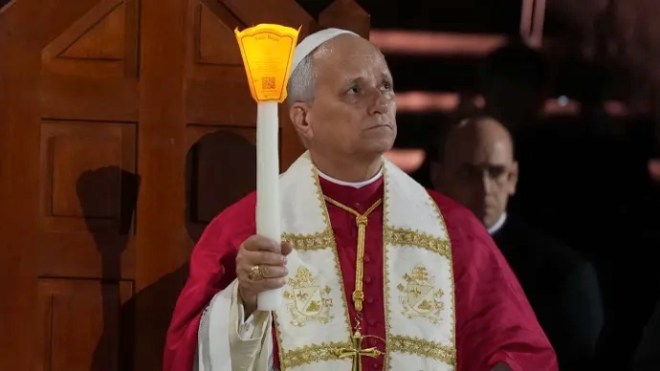
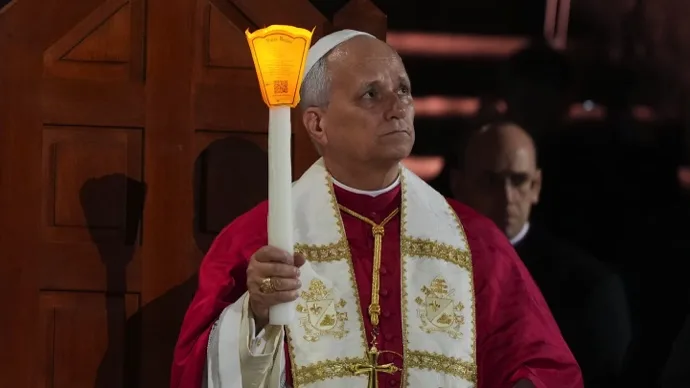
[AP Photo]
When Pope Leo XIV was elected after the pained finale of Pope Francis’ pontificate, there was hope that a younger, healthier pope would be able to guide the Catholic Church for quite some time before age and ailments slowed him.
Leo’s lung cancer diagnosis announced Tuesday has thrown a question mark into that scenario and his pontificate. Already, Peru’s president is suggesting Leo’s upcoming Latin America trip may have to be changed. And the revelation raises questions about what Leo knew and when, given his poignant prayers in late September at a French shrine known for its miraculous cures.
But Vatican watchers say the 71-year-old’s diagnosis could have other unintended effects, not all of them negative. It could propel Leo to accelerate his own agenda, which to date has been slow and deliberate. It also could galvanize support for him, bolstering his efforts to unify the fractured Catholic Church.
And most poignantly for his own ministry, the diagnosis has placed Leo squarely among the “fragile” and “vulnerable” who have emerged as a central focus of his pontificate. In his preaching, writings and interactions with the ordinary faithful, people who are wounded take center stage.
“There’s something really beautiful in that even the most powerful person in the church is broken,” said Natalia Imperatori-Lee, associate professor of theology at Fordham University. “He’s been so, so eloquent on how our fragility is also a source of our strength.”
The Vatican on Thursday said that the pope had spent a second peaceful night in Rome’s Gemelli hospital, where he’s expected to recover for a week.
“He got out of bed and had breakfast,” the Vatican said in the brief statement.
The relatively young pope was chosen last year
Leo was 69 when he was elected in 2025, relatively young compared with the two popes who immediately preceded him.
Pope Francis was 76 when elected in 2013 and already had part of one lung removed as a young man. Francis battled respiratory and mobility problems throughout his pontificate and died in 2025 after a lengthy hospitalization for double pneumonia.
Pope Benedict XVI was 78 when elected in 2005 and retired after eight years because he simply couldn’t go on anymore.
Leo was elected in large part because he was seen as someone who would be around long enough to stabilize and unify the church after Francis’ turbulent papacy, and get the Vatican’s finances, in particular, into order. He brought a youthful vigor to the papacy, bounding up the stairs of St. Peter’s Square and zipping off to the country each week to play tennis and swim.
“It’s a big question mark on the investment that many people have made on this pontificate: an emotional investment, a political investment, even a financial investment,” said Massimo Faggioli, a theologian at Leo’s alma mater, Villanova University in Pennsylvania.
He noted that Leo has emerged as a powerful counterweight to the Trump administration in preaching a message of peace as the U.S. and Israel launched a war on Iran. He has become a respected moral authority on the need for safeguards on artificial intelligence.
And yet “even the pope gets the ‘emperor of maladies’ — cancer,” he said.
But assuming Leo recovers fully — and oncologists say his type of lung cancer has the best prognosis — Leo could emerge even stronger as a global figure.
“The mystique of the survivor is very strong in our culture,” Faggioli said.
The pope’s brother, Louis Prevost, who has had multiple myeloma, a blood cancer, since 2017, said that he expected his baby brother to pull through.
“We’re hoping for the best,” Prevost told Newsmax from Tampa, Florida, where he’s in a clinical trial for his cancer. “They caught it early enough, and he’ll be able to heal from the surgery and go on with his papal ministry.”
But even Prevost was kept in the dark: He said he learned about the mass on Sunday, when Leo announced it to the world, and spoke to him afterward.
Prevost said that he asked the pope if it was serious and the pope said it wasn’t.
Visit to Lourdes seen in a different light
And even if the future is uncertain, Leo can draw from the recent past to help get through it.
During his Sept. 25-28 visit to France, Leo followed in the footsteps of millions of pilgrims who flock to the shrine in Lourdes each year to drink its spring water and pray for miraculous cures for all that ails them.
The Vatican hasn’t said when Leo learned that doctors suspected he had a cancerous mass in his lungs. Before Tuesday’s surgery, he underwent a series of preoperative tests, including a CT scan with contrast, a PET scan and a robotic biopsy, which has to be done under general anesthesia during a separate, secret hospital visit.
There are strong suggestions that Leo knew something even before leaving for France and that he scheduled the surgery for Tuesday — typically his day off — “because he wanted to keep as much as possible the commitments he made,” said Giovanni Maria Vian, the former editor of the Vatican newspaper L’Osservatore Romano.
All of which makes Leo’s visit to Lourdes all the more significant, if he had a hint then that he, too, was among the sick. NICOLE WINFIELD, VATICAN CITY, MDT/AP

Leave a reply
You must be logged in to post a comment.


