
DSEDT backs research projects to lay groundwork for science park
The Economic and Technological Development Bureau (DSEDT) will continue supporting major scientific research projects and cooperation between businesses and universities.
Weng Nianhui, director of the bureau’s Technology Industry Department, said authorities would provide platforms connecting companies with universities, alongside funding to reduce costs and strengthen collaboration between industry and researchers. This includes support for projects such as Macao Science-1.
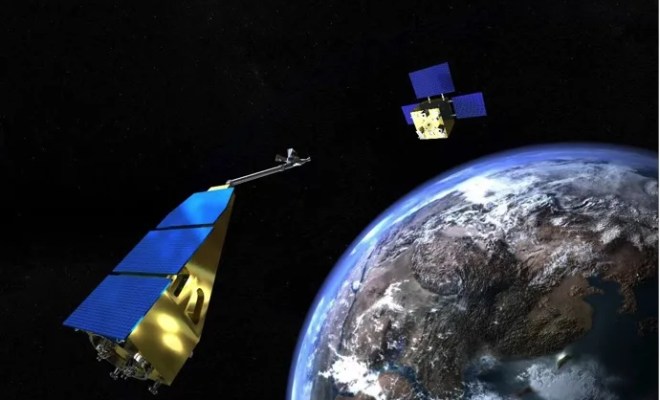
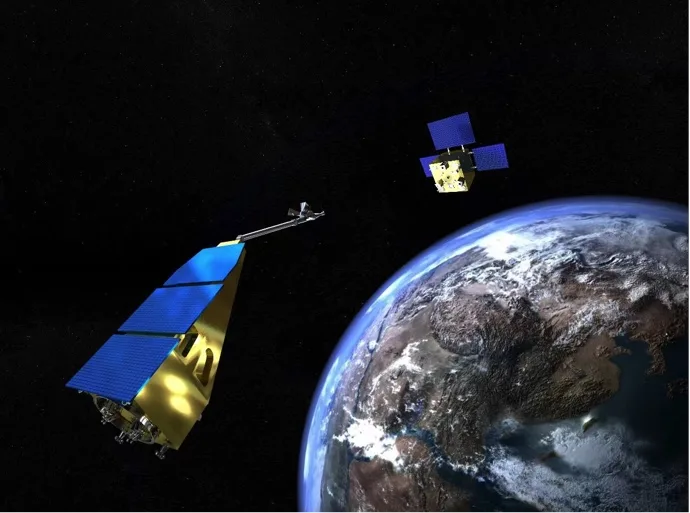
Launched on May 21, 2023, Macao Science-1 was the first space science satellite program jointly developed by mainland China and Macau, according to the China National Space Administration (CNSA). The mission comprises two satellites carrying instruments to measure the magnetic field and collect information about the space environment.
Macao Science-1’s observations of Earth’s magnetic field contribute to international research and applications ranging from spacecraft safety to space weather forecasting.
Its focus includes the South Atlantic Anomaly, a region where Earth’s magnetic field is unusually weak and radiation activity is higher.
CNSA states that the satellites’ data could improve spacecraft operational safety and support space weather forecasting and geomagnetic research.
While Macao Science-1 supplies observations for scientific investigation, DSEDT says its broader objective is to strengthen the links through which such research can support industrial development. Its proposed funding and matchmaking support would place universities and businesses at the center of that effort, DSEDT adds.
Weng said backing major research initiatives was intended to create a favorable environment for technology businesses and lay the groundwork for the industrial park. The emphasis combines support for scientific work with efforts to connect research institutions and potential commercial partners.
Zhang Keke, director of the Macao Academy of Space Technology and Applications, said Macao Science-1 continued to support satellite-related research by institutions worldwide, more than three years after its launch.
He told the local broadcaster that the project had expanded scientific cooperation and exchanges, drawing on mainland China’s resources while using Macau as a window for international engagement.
“’Macao Science and Technology-1’ satellite […] requires high-precision Earth magnetic field data. We have produced the first four-dimensional real-time Earth magnetic field model in China. From anywhere, we can know how the Earth’s magnetic field changes over time and space,” he said.
Zhang also said preparations were underway for Macao Science-2, which he expected to contribute to technological and economic development in Macau and internationally.




Leave a reply
You must be logged in to post a comment.


