
Make November a month for speed and road safety

Analysis
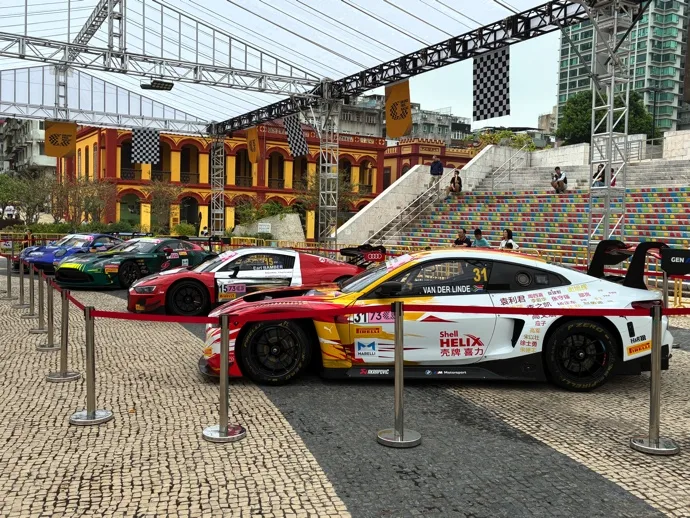
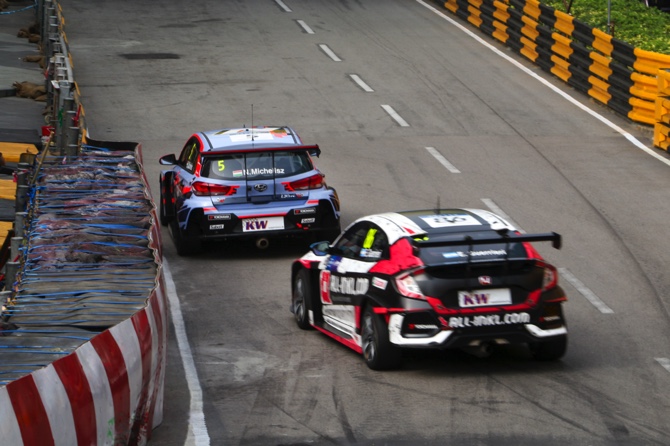
Macau and the surrounding areas of Hong Kong and Guangdong are preparing for the 73rd Macau Grand Prix, for decades the region’s leading sports and tourism event. Under the auspices of the Fédération Internationale de l’Automobile (FIA) and with the support of local authorities, the program includes three World Cup races in F4, GT and FR, a TCR World Tour race and several other races for local and Greater Bay Area drivers. The Macau Motorcycle Grand Prix will also return for its 58th edition. In all, 177 drivers from dozens of countries across five continents are expected.
The Grand Prix brings great energy to the city. A packed program of events shares the spotlight with the Macau International Music Festival and food and wine events, filling hotels and restaurants as tourists and other visitors arrive. For many residents, however, the period also brings disruption from changes to pedestrian routes, public transportation and vehicle traffic, as well as noise in areas near the Guia Circuit. These inconveniences are accepted because the benefits to the city and region are far greater.
Events are held during Grand Prix week, as well as in the weeks before and after it. Some are aimed at young people, with simulators and scaled-down circuits for children, as at Tap Seac Square about 10 days ago. But in a city like Macau, where police recorded 10,393 traffic accidents and nine deaths from January through September this year, and 14,638 accidents, seven deaths and 5,382 injuries in 2025, the period should also be used for a strong road safety campaign. It should promote safe driving and observance of the rules, with all Greater Bay Area cities taking part.
A regional safety challenge
The number of accidents and their social and economic cost are worrying in a region where the speed limit is 80 kilometers per hour on bridges and 60 kph on most roads. A drive through Macau’s streets and roads is enough to see motorcycles often traveling along the right side or middle of the road instead of keeping to the left, as do many other vehicles. Many vehicles also stay in the right lane, some moving at an absurdly low 20 to 30 kph without reason on clear roads and bridges, frustrating drivers behind them. Others weave between cars, as motorcycles do, changing lanes several times over a short distance. Some stop without warning, turn or make U-turns, or pull over to park without signaling. These behaviors show very low standards of civic responsibility on the road.
The problem is not unique to Macau. Hong Kong recorded 85,801 traffic accidents from 2021 to 2025. The annual total exceeded 17,000 in all but 2022, when 15,107 accidents were recorded. The accidents resulted in more than 450 deaths, 80,259 minor injuries and 5,088 serious injuries, according to the Road Safety and Standards Division of the Hong Kong SAR Transport Department. Separately, 2024 data from Statista and China’s 2025 National Statistical Yearbook (https://www.stats.gov.cn/sj/ndsj/2025/indexch.htm), the only year for which the author had access to data, show Guangdong had the highest number of traffic accidents among Chinese provinces, with 37,010, ahead of Hubei with 27,856 and Henan with 16,173. Guangdong recorded 6,491 deaths and 34,607 injuries.
If November each year means speed, competition and the Macau Grand Prix across the Greater Bay Area of Guangdong, Hong Kong and Macau, the period should not be wasted. It could become an annual opportunity for a major, coordinated campaign on road safety, driver education and civic responsibility.
A month of safer driving
A campaign held every November could help sharply reduce accidents, raise driving standards and prompt people to reflect on bad practices behind the wheel. These include indiscriminate mobile phone use, a problem now compounded by taxi drivers and motorcycle couriers delivering fast food; U-turns where they are prohibited; driving against traffic; poorly maintained road surfaces; failure to observe right-of-way rules, which differ between Macau and other Greater Bay Area cities; and improper use of roundabouts.
|
KEY TAKEAWAYS Tourism: Macau’s Grand Prix brings major tourism and economic benefits, while also disrupting traffic and daily life. Dangerous driving: Accident, injury and death figures across Macau, Hong Kong and Guangdong point to a shared road safety challenge. Road safety: A coordinated November campaign could promote safer driving, civic responsibility and cooperation across Greater Bay Area cities. |
The Public Security Police should also publish statistics on the number of accidents caused by poor driving and disregard for traffic rules, compared with accidents caused by speeding and other factors.
November could and should become the Greater Bay Area’s major road safety month. Possible initiatives, inside and outside schools, could include televised competitions devoted to these issues and combining sports, history and road safety. Drivers and manufacturers could take part, while top participants could receive cash prizes, trips, books and games. Sponsorship could come from Grand Prix sponsors and government authorities in every city in the region. Such efforts would build awareness of road safety and regional integration, help improve driving on the roads and contribute to greater safety, an unmistakable sign of civilizational progress.
If state security is important, road safety is no less so. Why? Because it means a better and longer life, greater happiness, lower costs and less harm to the health and well-being of the entire community and to its economy. Sérgio de Almeida Correia




Leave a reply
You must be logged in to post a comment.

