Journalists often seen by leaders as ‘enemy of the people’
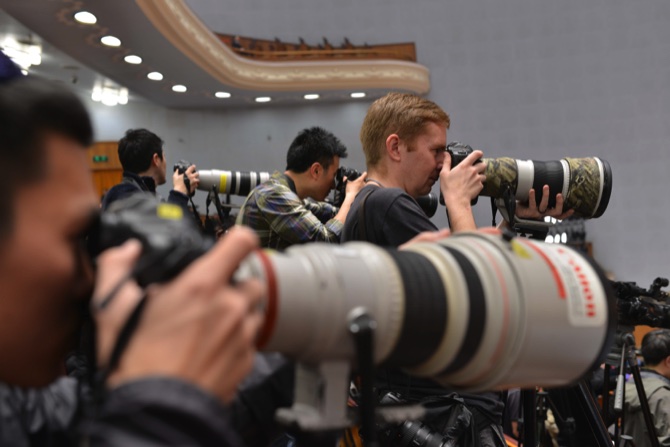
President Donald Trump’s assertion that journalists are “the enemy of the people,” with its dark echoes of Soviet dictator Josef Stalin, has reverberated through news organizations reporting from the White House and far beyond.
Former President George W. Bush recently said “it’s important for the media to call to account people who abuse their power, whether it be here or elsewhere.” Yet reporters in some countries suffer repression, imprisonment, injury or death, conditions far worse than in the U.S.
Here’s what it’s like covering leaders in more hostile or challenging environments:
EGYPT
President Abdel-Fattah el-Sissi has made no secret of what he sees as the damage the media inflicts on his government or on Egypt’s national security. He has spoken nostalgically of the era when the press rallied behind Gamal Abdel-Nasser, a charismatic and authoritarian leader, from 1956 to 1970.
El-Sissi, an army general who led the military ouster of an elected president in 2013, has hard-core supporters who have formed social media “brigades” that pounce in overwhelming numbers on any criticism of him.
He has also harnessed TV, with powerful talk show hosts vilifying his critics and praising his leadership. Those who do not toe the line are sometimes removed or — in the case of a Lebanese presenter last year — swiftly deported.
El-Sissi holds news conferences only when he hosts a foreign leader. Rather than field questions, he and his guest usually read statements and leave.
Limited access has left the Egyptian media almost entirely relying on el-Sissi’s off-the-cuff comments in televised events. He operates differently when traveling abroad, especially in the U.S., where he gives multiple interviews and appears tolerant of tough questions.
Reporters with cameras are sometimes harassed not only by police but also by hostile civilians. And a “terror law” criminalizes many cases of media outlets contradicting official statements.
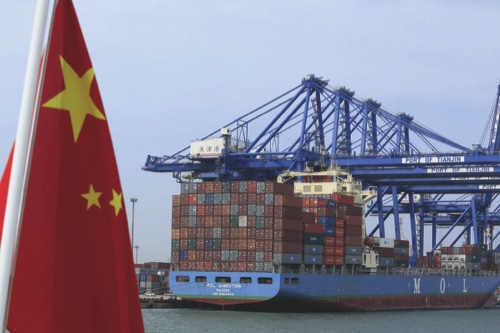
CHINA
 Chinese President Xi Jinping is unequivocal about the role of the state-run media in his country: to protect the ruling Communist Party’s authority and unity above all and to pledge loyalty to him.
The party wields tight control over how Xi is depicted, and reporters have little direct access to the leader. He is frequently shown on state media chatting with poor farmers or giving pep talks to applauding factory workers. But he rarely holds news briefings or does interviews, and visits with foreign leaders are tightly scripted.
During some state visits, Xi has held joint press conferences with his counterparts. Such briefings are often conducted either without questions or limited to two.
For the premier’s annual news conference in March, reporters typically must submit questions well in advance for approval. And Chinese reporters rarely, if ever, ask Xi challenging questions. Touring China’s powerful state media agencies last year, Xi ordered them to “strictly follow the party’s leadership” and focus on “positive reporting.”
Foreign journalists reporting on news deemed as sensitive are often followed and harassed by officials or hired thugs seeking to obstruct them. Nationalist news outlets sometimes describe foreign media reports on the repression of rights activists as part of a plot by “hostile forces” seeking to destabilize China.
Efforts to control Xi’s image extend even more tightly over the closely filtered internet. Searches for “Xi Jinping” on Weibo, China’s popular Twitter-like microblog, turn up results dominated by state media reports. Searches for “Xi Jinping’s family,” his daughter, or “Xi Jinping’s choices,” are blocked without explanation.
ISRAEL/PALESTINIAN TERRITORIES
Like Trump, Israeli Prime Minister Benjamin Netanyahu frequently calls the media hostile and biased, yet he is keenly aware of how he is portrayed and loves to make headlines.
For example, Netanyahu is being investigated by police for allegedly offering to help the publisher of Israel’s leading daily newspaper, Yediot Ahronot, against a free upstart rival in exchange for more favorable coverage.
Israel’s media are famously freewheeling and outspoken. Politicians are often accessible, and journalists can generally write whatever they want without fear for their safety. But as in the the U.S., the leader has derided the mainstream media for representing “elites” who disdain him and his more hard-line, nationalistic supporters.
When Netanyahu gives a rare interview, it’s usually with a foreign TV network whose anchors have time to ask only two or three brief and predictable questions. His aides say he prefers this format because he can largely control the agenda and his answers cannot be edited.
Like Trump, Netanyahu has embraced social media. His office frequently uses WhatsApp to distribute statements, often anonymous, on pressing matters. He sends Trump-like tweets and frequently posts statements and self-serving video on Facebook and Twitter.
While Trump complains about “fake news,” Netanyahu uses a similar catchphrase when asked about scandals in his office: “You will find nothing because there is nothing.”
Covering Netanyahu is only one of several challenges facing journalists in the country. Israel has a military censor that must clear any sensitive story that could affect its security.
Netanyahu’s security guards sometimes harass and even strip search journalists — especially foreigners and even Arab citizens of Israel. During clashes with the Palestinians in the West Bank or east Jerusalem, Israeli security forces have also roughed up reporters. Photographers have had equipment damaged, suffered from inhaling tear gas or even been shot with painful sponge-tipped bullets.
The rival Palestinian governments in the West Bank and Gaza have generally poor records on media freedom. Both the internationally backed Palestinian Authority in the West Bank and the Hamas government in the Gaza Strip have harassed and arrested local journalists whose coverage they don’t like. Last month, a Palestinian AP reporter was arrested at gunpoint by Hamas security while covering a protest.
PHILIPPINES
It’s been perplexing at times for journalists covering President Rodrigo Duterte, one of Asia’s most unorthodox leaders.
He has held abrupt news conferences lasting well past midnight, spiced up his public remarks with hyperbole, cursing and sex jokes, and made U-turns on key policy pronouncements. Reporters and even Cabinet members have been kept guessing as to whether he’s serious or, in his own words, “just taking you for a ride.”
The 71-year-old Duterte threatened last year that a military exercise by U.S. Marines and their local counterparts would be the last of his six-year term. A few weeks later, his defense secretary said Duterte had approved continuing the exercises, although the number of drills would be reduced and exclude mock assaults that have riledChina. Such flip-flops have sometimes created a dilemma for journalists on how to report his policy remarks.
Duterte has gotten basic facts wrong, even his age. He once said he’s 72 years old, when he’s actually a year younger.
He has also suggested declaring martial law, only to have a spokesmen deny it the next day, blaming journalists for misreporting.
A number of journalists have been the targets of online criticism from hard-line Duterte supporters, in what is regarded as one of the most dangerous countries for journalists. The National Union of Journalists of the Philippines said in September: “We will never take any threats, whether of physical harm or to silence us, lightly for we have lost far too many of our colleagues and hardly seen justice for them.”
RUSSIA
President Vladimir Putin is never embarrassed by a sharp question — if you can get the floor to ask it.
The Kremlin’s handling of the media hews to the general pattern of its domestic policy course, which has been described as a “managed democracy.” Parliament is dominated by Putin loyalists, the courts are ready to obey orders from authorities, and most of the Russian media follow the Kremlin’s wishes.
Most Russians get their news from state-controlled nationwide TV networks. Facebook remains a lone oasis for liberally minded Kremlin critics as authorities have increasingly tightened controls over Russian online media.
Putin, a law school graduate, is keen to preserve decorum and show respect for the rule of law, so his media appearances are intended to serve as a show of press freedom. He also appears to see himself as the ultimate spin doctor, trusting his ability to shape public perceptions.
His annual live news conference — routinely lasting over four hours — is intended to burnish his image as a strong leader who cares for his people and never hesitates to take on Russia’s foes. Hundreds of reporters, mostly from Russia’s far-flung provinces, wave their hands, brandish placards and even don colorful outfits to catch his eye.
His spokesman directs the event, but Putin usually chooses some questioners. He rarely loses his cool and seems to enjoy the show.
State-controlled TV often shows live Putin’s meetings with Russian government officials, businessmen and cultural figures. There’s also an annual call-in TV show, similarly
lasting for hours, when Putin is asked questions via video link from various sites across Russia. The shows are carefully orchestrated.
VENEZUELA
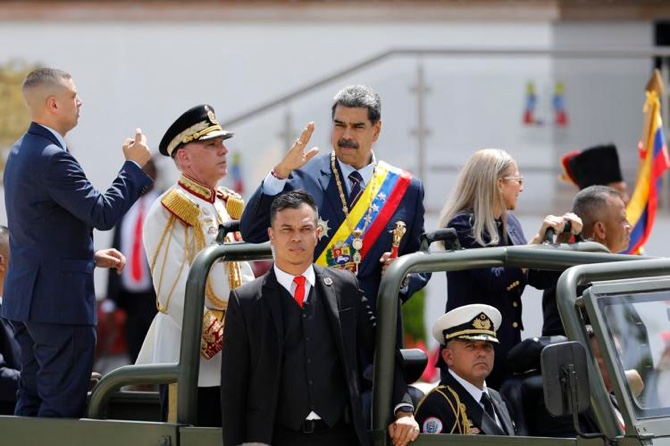
One sign of how muzzled journalists have become in Venezuela is that President Nicolas Maduro barely bothers to attack them anymore.
Baiting Venezuela’s press was a favorite pastime of late leader Hugo Chavez, who tightened his grip on power by accusing the media of acting as fascists and plotting his overthrow. As a result of his actions, key issues such as corruption and health care are underreported by mainstream media for fear of heavy fines or prison.
By the time of Chavez’s death in 2013, there was little need to worry. A number of newspapers and broadcasters once highly critical of the socialist government changed ownership and ended up in the hands of businessmen seen as cozy to the ruling party.
A government monopoly on the importation of newsprint further squeezed newspapers, with more than a half-dozen stopping printing and dozens more forced to cut back.
At news conferences, Maduro frequently treats independent journalists with disrespect and favors those from friendly outlets. In a move that may have foreshadowed White House spokesman Sean Spicer’s “Skype seats,” he even set up a live satellite feed from the Venezuelan Embassy in Moscow last year to field questions from political sympathizers denouncing U.S. “imperialism.” The government also has a very active social media presence.
The biggest threat to journalists comes from security forces, who have seized equipment or even attacked reporters. Filming food lines can be grounds for arrest under expansive national security laws.
A correspondent for ABC News was held for 72 hours in October by the feared Sebin intelligence police after filming at a hospital for a story on health care. More frequently, reporters are denied entry at the airport on a pretext.
ZIMBABWE
President Robert Mugabe has been in power since Zimbabwe’s independence in 1980, and local and foreign media sometimes face hostility from the government if they are perceived to be tarnishing the image of him or the country.
The 93-year-old leader has often been harshly critical of journalists who don’t work for state media. Those whose reports were seen as negative sometimes risked arrest, and some were assaulted while covering the seizure of white-owned farms starting in 2000.
Access to Mugabe’s meetings with foreign visitors or events at the ruling ZANU-PF party’s headquarters used to be limited to state media. Now there’s much more access for accredited journalists, whether affiliated with state media or not, although some are still barred from certain events after being accused of not portraying Zimbabwe in a positive light.
Physical threats to journalists have decreased, possibly because the ruling party is firmly in control and concerns about human rights are no longer in the forefront of international affairs.
A Zimbabwean photographer who has worked extensively for The Associated Press has been beaten twice by Mugabe’s bodyguards, but the president also once instructed his security team to back off and let him work. AP


Leave a reply
You must be logged in to post a comment.