
Gov’t restructures three SME support funds

[Photo: Renato Marques]
The Executive Council (ExCo) has also concluded its analysis of an administrative regulation that aims to restructure and amend three funds that support local small and medium enterprises (SMEs) and young entrepreneurs.
The existing programs, named the SME Support Plan, Young Entrepreneurs Support Plan and Subsidy Plan to Encourage Business Development and Growth, will now be consolidated into a new fund named the Industrial Development and Commercialization Fund.
The move aims not only to unify procedures and streamline application review, but also to introduce measures to help some entrepreneurs repay their loans and strengthen supervision of the use of approved loans.
Among the new rules, the regulation also expands the scope of the support fund to cover business, commercial and industrial operations in the Hengqin cooperation zone.
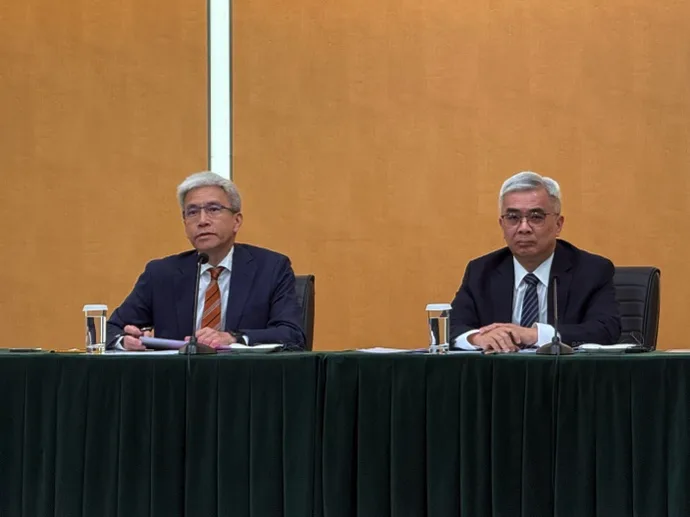
In terms of added flexibility to facilitate loan repayments, the director of the Economic and Technological Development Bureau (DSEDT), Yau Yun Wah, noted that the new plan to support young entrepreneurs includes extending the repayment period to up to 10 years and also adds flexibility measures that he said can be used “in cases of sudden changes in the economic and business environment.”
Still, Yau also said rules allowing the cancellation of support measures are stricter, so the government can inspect the use of the funds or benefits provided more effectively.
Questioned by the media on the difficulties reported by some local SMEs in repaying loans under these plans, Yau said, “We hope that we can continue to help them to repay the loans. We are doing our best, and for instance, we are allowing repayments over a period of six months without any interest, among other special measures,” he noted.
Regarding the consequences of non-compliance, Yau added, “If they violate their obligations and responsibilities like what Secretary Wong mentioned just now, if they make false statements to get our subsidies or they spend their subsidies on other things and we cancel our subsidy, the beneficiary cannot apply again within two years.”
Yau also added that the number of projects and applications DSEDT has received regarding the SME and young entrepreneur support plans has reached more than 1,000 in the last three years, with 269 from young entrepreneurs.
These new rules also apply to current applications, as well as those previously submitted and already ongoing.
The administrative regulation will enter into force the day after its publication in the government’s Official Gazette.
Directors of DSOP and DSF to join land commission
The Executive Council (ExCo) also announced yesterday that a new administrative regulation has been concluded to include the director of the Public Works Bureau (DSOP), Lam Wai Hou, and the director of the Financial Services Bureau (DSF), Ho Silvestre In Mui, in the Land Commission.
According to Wong Sio Chak, the inclusion of the two directors is intended to accelerate procedures related to public services in buildings, promote compliance with land-use deadlines and facilitate follow-up on matters related to concessionaires and concession contracts, as well as the inspection and supervision of compliance with land concession contracts.
The commission is an advisory government body responsible for issuing official opinions and reviews on land concessions, leases and land utilization terms.
Gov’t continues administrative reforms to save resources, increase efficiency
As promised a month ago by the Secretary for Administration and Justice and spokesperson of the Executive Council (ExCo), Wong Sio Chak, the government is continuing to advance administrative reforms across several bureaus, funds and entities, aiming to restructure operations to save human and financial resources and increase efficiency.
A month ago, when announcing the move of the Macau Conservatory from the Cultural Affairs Bureau to the Education and Youth Development Bureau, along with other restructuring measures, Wong noted that the next step would be to optimize the Monetary Authority of Macao (AMCM), as well as other funds and entities.
Yesterday, the same official said the ExCo had concluded its analysis of restructuring plans for several entities, including AMCM, and said the authority, which oversees financial and monetary matters in Macau, will adjust its administrative council from a previous composition of “up to five members” to just three members.
More importantly, AMCM Chairman Simon Vong said it now proposes a fixed three-year term for administrative council members, whereas previously there was no time limit.
As for the departmental restructuring, the AMCM will move from eight departments and 10 divisions to six departments and 12 divisions, with some of its existing departments being consolidated into divisions.
Unlike other reforms, this does not reduce staff numbers; rather, it reallocates workers to increase efficiency in some areas.
Like the Administrative Council, the newly approved administrative regulation will also adjust the composition of the Inspection Committee and the Advisory Council of AMCM, including more professionals in both bodies to “reinforce the specialization and representativeness,” Wong said.
The administrative regulation to reorganize AMCM comes into force on Oct. 22. RM





Leave a reply
You must be logged in to post a comment.


