
Regional privacy authorities publish anonymization guide

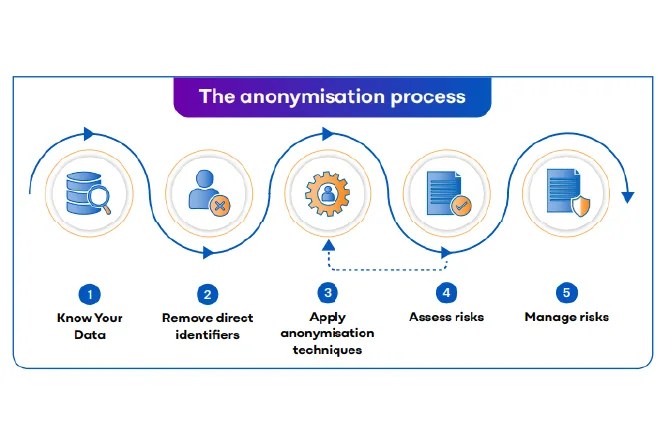
A new guide aimed at enhancing AI and data security through anonymization has been jointly issued by privacy authorities from Macau, Hong Kong, and seven other countries to protect personal data in the digital age.
The guide aims to boost the security of artificial intelligence (AI) systems and enhance personal data protection by providing practical, straightforward steps to anonymize personal information.
Anonymization is a vital tool in this effort, as it significantly lowers the risk of data breaches and misuse. This safeguard is especially critical in AI applications, where massive volumes of sensitive data are processed daily, demanding the highest standards of privacy protection.
The “Guide to Getting Started with Anonymization” – developed collaboratively by data protection authorities from Macau, Hong Kong, Australia (Victoria), Canada (Federal and British Columbia), Japan, South Korea, New Zealand, and Singapore – received official approval on June 11 at the 63rd Asia Pacific Privacy Authorities (APPA) Forum.
To facilitate wider use in the region, the Personal Data Protection Bureau of Macau (DSPDP) and Hong Kong’s Office of the Privacy Commissioner for Personal Data (PCPD) proactively translated the guide into Chinese.
In a media statement yesterday, Hong Kong’s Privacy Commissioner, Ada Chung, highlighted the increasing role of AI in both Hong Kong and Macau, stating: “As more and more organizations in Hong Kong and Macau begin to incorporate AI into their daily operations, anonymizing personal data when using and/or sharing data not only enhances AI security and data protection, but also preserves data utility.”
The guide outlines a clear five-step process for organizations: understanding the data, removing direct identifiers such as names and identity card numbers, applying anonymization techniques to indirect identifiers like birthdates and gender, assessing risks of re-identification, and managing any residual risks with appropriate mitigation measures.
Ken Yang, DSPDP director, noted Macau’s role in advancing international collaboration on data privacy.
“The participation of the DSPDP in the drafting and joint translation of the Anonymization Guide demonstrates its commitment to international collaboration as the Chair of the Communications Working Group of APPA,” he said.
Yang also pointed to enhanced cooperation with Hong Kong following their recently signed Memorandum of Understanding (MoU), expressing optimism about continuing joint efforts to promote personal data protection across the Guangdong-Hong Kong-Macao Greater Bay Area.
The earlier June MoU between DSPDP and PCPD formalized deeper cooperation in personal data privacy and digital economic development throughout the GBA. According to prior joint statements, this agreement facilitates collaboration on enforcement practices, public awareness campaigns, and joint training sessions.
“The signing of this Memorandum of Understanding between the PCPD and Macau’s DSPDP further strengthens the ties between the supervisory authorities of both regions,” said Chung.
Meanwhile, Yang emphasized that the MoU supports healthy and orderly digital economic growth, harnesses the value of data, and injects new momentum into the Greater Bay Area’s economic and social development — all while safeguarding personal data.


Leave a reply
You must be logged in to post a comment.


