Community commerce must be core infrastructure, business leader warns


[Photo: Lynzy Valles]
A local business leader has cautioned that community commerce must be treated as core infrastructure, warning that neighborhoods cannot be built on housing and roads alone.
In an opinion piece published by Macao Daily News on Monday, Wong Pui Lam, a senior official of the Macau Chinese Chamber of Commerce’s Strategy Research Committee, said Chief Executive Sam Hou Fai had called for a government-led, market-driven, and community-engaged urban renewal model.
Wong urged authorities to use the ongoing revision of the urban master plan to address the structural imbalance between old districts with inadequate facilities and new districts with lagging supporting infrastructure.
She called for clear planning standards for schools, health centers, and elderly care facilities, and stressed that public amenities should be planned and delivered in tandem with new developments to create an age-friendly city.
She cited the stark lesson of Coloane’s Seac Pai Van, where thousands of public housing units were built but residents were left with no nearby shops, markets, or eateries – forcing them to travel to other districts for basic necessities.
“A livable community cannot be reduced to just housing and roads,” she wrote. “Community commerce is the core infrastructure that sustains daily life.”
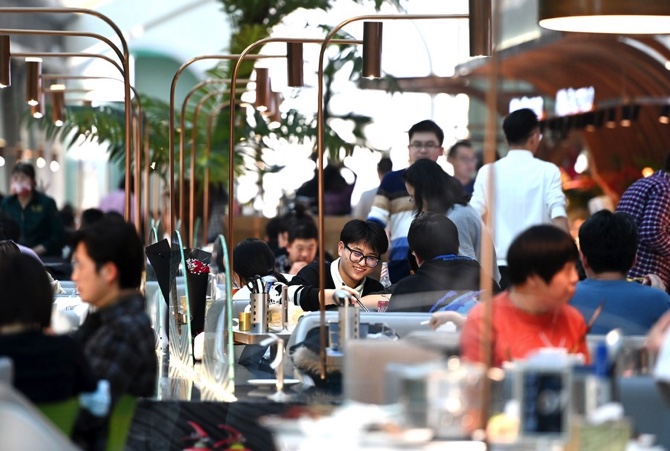
Wong pointed to the success of the city’s market cooked-food areas – such as those in Iao Hon, S. Lourenço, and the Patane Market – which have become popular dining destinations for both locals and tourists. She noted that in a city that receives over 40 million visitors a year, an authentic plate of fried noodles or a bowl of congee can be a more compelling draw than a five-star hotel buffet.
Drawing on Singapore’s hawker center model – a UNESCO-recognized intangible cultural heritage – she argued that Macau already has the ingredients for similar success. What is lacking, she said, is systematic planning and long-term vision.
Wong put forward four recommendations: first, ensure new developments such as Zone A and urban renewal projects include sufficient space for wet markets and cooked-food areas; second, adopt a public management model to keep rents affordable; third, incorporate community dining into tourism promotion; and fourth, streamline licensing to encourage young entrepreneurs.
“Urban renewal should not be just about demolition and reconstruction,” she said. “It should be about reshaping communities.”




Leave a reply
You must be logged in to post a comment.