Revision cuts 2040 population forecast, earmarks land for major projects

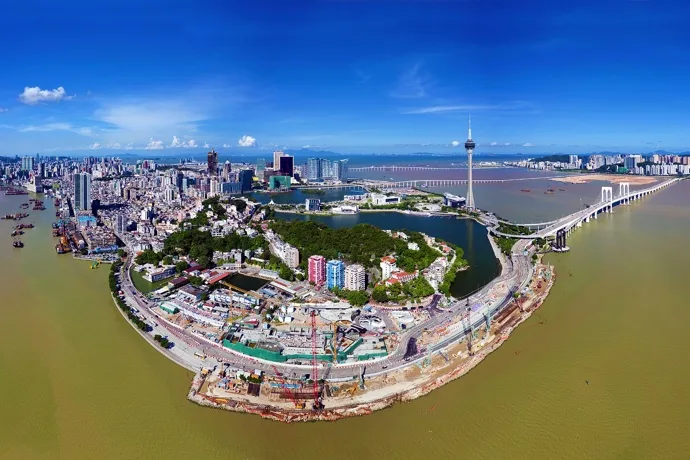
Macau’s planning population has been revised down to about 783,000 by 2040 under the government’s amended Urban Master Plan (2020-2040), which also earmarks land for three major public construction projects.
The revised version was presented yesterday to members of the Urban Planning Committee at a special meeting dedicated solely to this topic.
The meeting, chaired by Land and Urban Construction Bureau (DSSCU) director Lai Weng Leong, heard the consultant team’s revised plan.
According to the presentation, the amendment accommodates land needs for major public construction projects and for “1+4” industrial diversification, and updates the plan to reflect higher-level plans, legislation, Chief Executive announcements, and studies.
The revision earmarks land in western Zone B and in Zone C of the new landfills for the Macau International Integrated Tourism and Cultural Zone, land in western Zone E1 and on Avenida Wai Long for the Macau Science and Technology Research Industrial Park, and adjusts the airport area for its latest expansion.
Positioned as a highland for international talent, it brings the Macau-side Hengqin checkpoint area and the V-shaped parcel near Gongbei into scope.
Public consultation ran for 60 days, from June 29 to August 27, with five sessions attended by about 280 people. Of the 4,072 opinions in 219 submissions, about 55% focused on planning district guidelines, land use, and the overall spatial structure. “Overall, society generally supports amending the master plan,” the consultants said.
Committee member Teng Kai On called the consultation “very positive” and raised several observations, including the need to balance rigidity and flexibility and the difficulty of using numbered district names.
“Macau is a city with history and depth, and many street names have their own stories,” he said, suggesting adding familiar local names alongside the numbered zones.
On population, he said, “Only when the master plan answers how the 780,000 population is distributed will district-based urban renewal have a stronger basis.”
On transportation, committee member Au Weng Hei noted that Zone C and western Zone E1 will become a cultural tourism area and technology park, generating substantial traffic, and asked how they would connect to the peninsula and Taipa.
“The revision doesn’t mention a Fifth Channel [link between Taipa and the Peninsula], even though it was previously suggested that one could be built in Zones C or D,” he said.
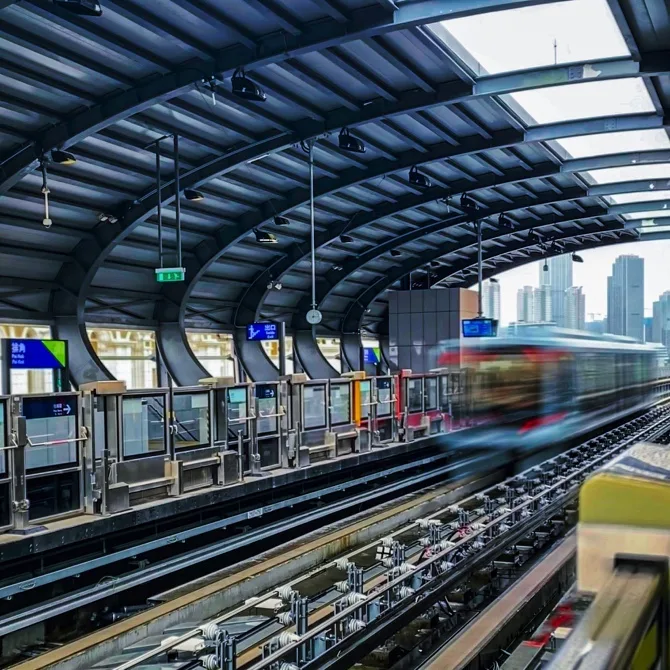
In response, the Public Works Bureau (DSOP) said the master plan already reserves an east-west road alignment, with the February Light rapid transit (LRT) study proposing a new Taipa North line connecting the three zones.
On the fifth link between the two sides, a deputy director said that existing crossings would meet demand through 2040, but forward-looking planning was under consideration.
“Whether it would take the form of rail or road, and at what nodes, is still being explored — at present it’s at a relatively preliminary stage,” the official said.
Another member urged that the plan reflect the past five years’ changes, citing a decline in births from more than 4,800 in 2022 to about 1,300 in the first half of this year, and asked whether it should address functional shifts in districts such as Areia Preta or the planned sports and community complex in Fai Chi Kei.
A representative from the consulting team said the new forecast, which projects a population of 783,000, had been incorporated and includes built-in flexibility to adjust density, land use, and facilities as demographic trends evolve.
Notably, the government published the first-stage amendment to the Urban Master Plan on June 29, lowering the 2040 target planning population from 808,000 to 783,000—a 25,000-person reduction.


Leave a reply
You must be logged in to post a comment.